Protecting Wildlife   Supporting Communities   Promoting Education

www.tusk.orgTUSK
AfriCat Foundation, Namibia

AfriCat Foundation

Project Location: Otjiwarongo, Namibia
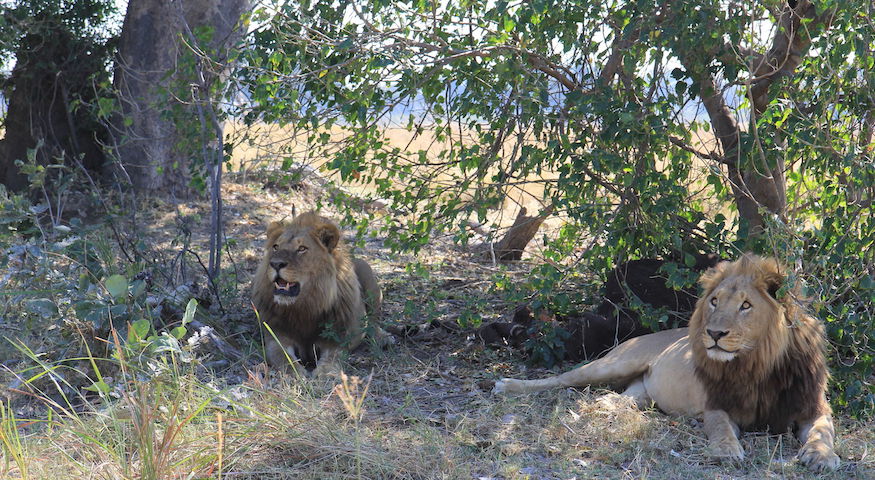
Endangered species: Cheetah, Lion, Leopard and African Wild Dog.
Land under protection: 223 sq km
No. local people benefiting from project: 400
No. local people employed by project: 8

Background Information

AfriCat has been working to save the large carnivores of Namibia since 1993. An increasing human population and greater demands on food production have caused environmental degradation and habitat loss and places large carnivores in direct competition with farmers. It is not known how many carnivores are killed each year across Namibia, but it is clear that long term conservation will only succeed with the support of rural and farming communities.

Namibia is home to around a third of the global cheetah population, the lion population in the north of the country is estimated at between 600-1000 animals, making it one of the most important populations for viable long term survival. Namibia also has a large leopard population, currently undergoing a nationwide census, as well as having isolated populations of brown and spotted hyenas and wild dogs. Increased fencing of farm land impacts the areas over which carnivores can range freely, whilst cattle farming has produced significant bush encroachment and soil erosion over large areas of central Namibia.

In response to these issues AfriCat has followed a number of strategies:

Rescue and Release and Welfare

The team rescued captured carnivores from local farms, mostly cheetahs, releasing them elsewhere or caring for injured animals and cubs that were very young at their Welfare Unit. Africat has assisted over 1,000 animals with 85% being re-released.

This part of their work has now been taken on by a group of similar conservation charities, so that Africat can focus on Rehabilitation of captive carnivores, however the Welfare unit is still home to around 100 animals.

Education

Some years ago, the team initiated an Education Programme, teaching small groups of children about the benefits of conservation and sustainability. Since inception the programme has reached 20,000 children. AfriCat continues to raise the importance of education in its’ conservation work. During the many years of Rescue and Release it was often pressure from the children of farmers that resulted in a call to Africat. This willingness of the young to consider different approaches to an old problem is crucial.

Working with Communities

AfriCat now has centres both at Okonjima, where it was founded and at AfriCat North, based at Kavita on the southwestern boundary of the Etosha National Park. AfriCat North is setting up a new team to support local communities who suffer loss of livestock through carnivore attacks. They will be working with local communities to improve protection for livestock and have already constructed a number of carnivore proof kraals.

Rehabilitation

The focus for long term conservation has moved to the Rehabilitation of captive cheetahs. At Okonjima the large fenced reserve (22,000 ha) is being used to trial the viability of re-introducing animals that have spent much of their life in captivity to a protected, but wild environment. So far results are encouraging, with cheetahs quickly hunting for themselves, particularly when part of a coalition (two or more animals). The next step is to find suitable locations in Namibia or beyond for their long term relocation.

AfriCat continues to have measurable impact and builds on many years of experience. It remains a small, but intensly focussed team that benefits enormously from the support of the tourist operations both at Okonjima and Kavita, that provide significant logistical assistance as well as funding.

Tusk Support

Tusk has supported AfriCat since its inception by providing funds to purchase a light aircraft and a grant to build a 10,000 acre enclosure as well as support the veterinary costs. Its most recent grant came in the form of a legacy which has allowed the project to create a 55,000 acre reserve which will enable long term residents of the predator programme to be released in effect back into the wild. The benefits to AfriCat of achieving this goal are two-fold. A chance to enhance its work in the field of conservation, rehabilitation, education and research, as well as provide an opportunity for the Foundation to dramatically improve its long term financial sustainability with resulting regular income from Okonjima’s eco-tourism operation.

Comments from the field

Tusk’s support has been invaluable to the growth of the AfriCat Foundation and what the organisation has been able to achieve in its mission to save Namibia’s large carnivores.

Carla Conradie, AfriCat

Latest News

DEADLY TRADE: RHINO HORN POACHING SURGES. A marked increase in rhino horn poaching has been blamed on the growing Chinese population in Africa. On safari in Kenya... More ...

PACE UK RECEIVES EXCELLENT REVIEW. "The series of ten short videos give a very positive insight into the people of different parts of Africa... More ...

Upcoming Tusk Events

About Tusk

Tusk video

PACE. Pan African Conservation Education

Find Tusk on Facebook
Join our growing online community on facebook to keep up-to-date with our news

Tusk on Twitter